

When anxiety, depression, trauma-related concerns, or substance use begin affecting work, relationships, or daily routines, weekly support may not feel like enough. Mental health outpatient treatment in Sarasota can provide structure while allowing you to remain connected to home and everyday responsibilities.
Mental health outpatient treatment Sarasota can include structured therapy for anxiety, depression, trauma-related concerns, and co-occurring substance use. CenterPointe’s Intensive Outpatient Program, or IOP, is designed for people who need more support than weekly counseling but do not require inpatient or residential care. Fit depends on an individual assessment.
CenterPointe Counseling and Recovery takes a brain-based, heart-centered approach in a small-group outpatient setting. The first step is understanding what you are experiencing, how substance use may overlap with mental health concerns, and which level of care is appropriate. You can also review insurance coverage and dual-diagnosis treatment at CenterPointe while comparing options.
What Mental Health Conditions Are Treated at CenterPointe?
CenterPointe provides outpatient support for adults experiencing substance use concerns alongside anxiety, depression, trauma-related concerns, and other mental health challenges. An assessment helps the clinical team understand symptoms, history, safety needs, strengths, and goals before recommending a treatment plan.
The purpose of this process is practical. A person may be dealing with several concerns at once, such as sleep disruption, worry, low mood, conflict at home, or difficulty staying away from substances. Those experiences do not automatically point to one diagnosis or one treatment setting. A qualified professional can ask about timing, severity, daily functioning, past care, current supports, and immediate safety. That information helps the team decide whether CenterPointe’s outpatient model is appropriate and what services should be included.
Outpatient mental health care is also not a promise that symptoms will disappear quickly. Progress can involve learning to notice warning signs, practicing coping skills, rebuilding routines, improving communication, and continuing care between sessions. Treatment goals should be specific to the person and revisited as needs change. If the assessment identifies a need for emergency stabilization, medical monitoring, or continuous supervision, outpatient IOP may not be the right first setting.
Anxiety and depression
Anxiety may involve persistent worry, panic symptoms, irritability, avoidance, or difficulty settling the mind. Depression can include low mood, loss of interest, fatigue, hopelessness, or changes in concentration. These experiences vary by person and may overlap with substance use, withdrawal, grief, medical concerns, or major life stress.
Care should not assume that every symptom has one cause. Individual assessment gives a qualified professional an opportunity to consider the whole picture and determine whether outpatient care is a suitable fit.
Trauma-related concerns
Trauma can affect responses to stress, relationships, memories, and perceived danger. Some people experience distressing memories or hypervigilance. Others notice avoidance, emotional numbness, or difficulty trusting support. Treatment planning should reflect each person’s history, current needs, and readiness for care.
Co-occurring mental health and substance use concerns
When substance use and mental health symptoms occur together, CenterPointe uses a unified treatment-plan perspective. This is commonly called dual diagnosis treatment for mental health. Considering both concerns together can help the care team build practical recovery support around the whole person.
CenterPointe is an outpatient provider, not an inpatient or residential facility. Its IOP is intended for people whose needs can be safely supported in that setting. If someone needs immediate protection from danger or continuous supervision, call 911 or 988 and seek emergency support.
Is Mental Health Outpatient Treatment Sarasota Right for You?
Mental health outpatient treatment Sarasota residents seek may refer to different levels of care. An assessment is the best way to determine whether weekly therapy, IOP, or a more intensive setting fits current symptoms and safety needs.
| Care setting. | What it generally offers. | Question to ask. |
|---|---|---|
| Weekly outpatient therapy. | Scheduled individual support with care between visits. | Do I need more structure? |
| Intensive outpatient program. | Multiple structured therapy sessions each week while living at home. | Does an assessment support IOP? |
| Inpatient or hospital-based care. | More continuous supervision or stabilization when clinically needed. | Is immediate safety support required? |
How outpatient care differs from inpatient care
Outpatient treatment takes place during scheduled visits, with clients returning home afterward. An IOP offers more structure than traditional outpatient therapy without requiring overnight residence. CenterPointe provides outpatient IOP services in Sarasota. It does not provide inpatient or residential care.
Who may benefit from an IOP?
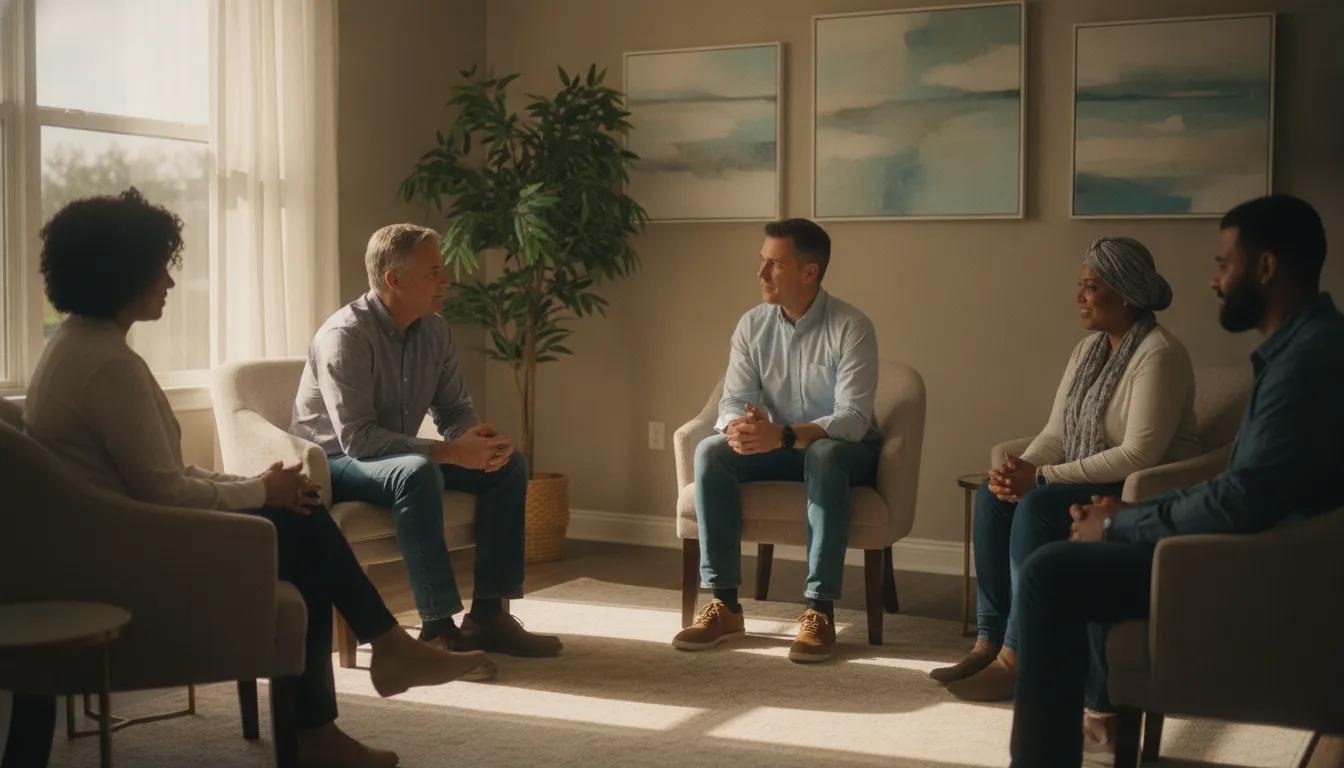
An outpatient IOP may help adults who need consistent support for mental health concerns, substance use, or both and can remain safely engaged in the community. CenterPointe’s program meets Monday, Wednesday, and Friday from 6:00 to 9:00 PM, for nine hours of care each week. Groups are limited to approximately 8 to 10 people. Learn more about CenterPointe’s IOP program.
Family-member or support-person participation is required for IOP treatment. Family therapy and education can help loved ones understand recovery, communicate more effectively, and become informed sources of support. The treatment team can explain participation expectations during the assessment.
Step-down care and daily responsibilities
Some people enter outpatient care after completing a more intensive setting. Others begin with IOP because their assessment indicates that they can remain safe and engaged at home. A typical IOP course lasts about 8 to 12 weeks, although duration varies with individual needs and progress. Work, school, parenting, and other responsibilities can be discussed during treatment planning.
Call (941) 488-4811 to discuss whether outpatient support may fit your needs.
How Does Mental Health IOP Work Alongside Addiction Treatment?
When mental health concerns and substance use affect one another, treatment can address both within one coordinated outpatient plan. CenterPointe’s IOP combines structured clinical care with practical recovery support while allowing participants to remain connected to home and community life.
- Attend a consistent schedule. The current IOP schedule is Monday, Wednesday, and Friday from 6:00 to 9:00 PM. Each treatment day includes three hours, for nine hours of structured care each week.
- Build connection in a small group. Groups are limited to approximately 8 to 10 people. Participants can learn from peers while receiving guidance from the treatment team in a more personal setting.
- Use multiple therapy formats. IOP includes group therapy, individual therapy, family therapy, and recovery counseling. Individual sessions provide private space for personal goals. Group sessions support skill practice and shared learning. Required family participation connects treatment to daily life.
- Learn recovery and emotional regulation skills. Education may address moods and feelings, stages of change, cravings, stress in early recovery, brain chemistry, and relapse-prevention skills. These tools support recovery but do not guarantee that relapse will never occur.
- Coordinate appropriate clinical support. When appropriate, a care plan may include medication management, ongoing assessment, and communication with relevant providers. Services and recommendations depend on the person’s evaluation and needs.
This approach is designed for people who need more structure than weekly counseling but do not require inpatient or residential care. A qualified professional can recommend another resource when outpatient treatment is not sufficient for current needs.
How Do Individual, Group, and Family Therapy Support Recovery?
Individual, group, and family therapy serve different purposes. Together, they can keep care personal while addressing relationships, routines, communication, and recovery support outside sessions.
Individual therapy
One-on-one sessions give clients space to discuss anxiety, depression, trauma-related symptoms, substance use, sleep, stress, relationships, and goals. A therapist can explore personal history without assuming the same plan fits every person. Ongoing assessment also helps the clinical team adjust goals as needs change.
Group therapy
Group sessions provide a structured setting for communication, self-awareness, coping skills, and peer support. Hearing other perspectives can reduce isolation and help participants recognize patterns. CenterPointe’s small-group model is limited to approximately 8 to 10 patients, creating room for meaningful participation while respecting privacy.
Family therapy and required support-person participation
Mental health and substance use concerns can affect trust, responsibilities, boundaries, and communication. Family members or support persons are required to participate in IOP treatment. Family therapy and education can help loved ones understand the treatment plan, respond more effectively, and support recovery beyond scheduled sessions.
Insurance coverage, authorization requirements, and covered services vary by plan. Ask the treatment team what information to verify, and review CenterPointe’s insurance and dual-diagnosis information before enrollment.
How Can Holistic Therapies Complement Mental Health Recovery?
CenterPointe’s brain-based, heart-centered approach recognizes that stress, trauma, substance use, and emotional health can affect the whole person. Within the MindSpa setting, supportive therapies may complement an individualized outpatient plan and give clients additional ways to practice relaxation, body awareness, and self-care.
- Neurofeedback. This brain-based modality is part of CenterPointe’s broader approach to recovery. Its role should be discussed with the treatment team rather than viewed as a stand-alone solution.
- CranioSacral therapy. This gentle supportive option may fit some individuals’ goals and care plans. Read more about CranioSacral therapy at CenterPointe.
- Acupuncture. This supportive modality may be considered alongside counseling and recovery work, with expectations kept realistic and personal.
- Sensory float tanks and infrared sauna. These MindSpa options can provide quiet wellness support when appropriate. They do not replace assessment, therapy, medication management, or safety planning.
These modalities are adjuncts, not cures or replacements for clinical treatment. Participation should follow an assessment and ongoing communication with the care team. CenterPointe is located inside MindSpa at 5632 Bee Ridge Road, Unit 101, Sarasota, Florida.
Call (941) 488-4811 to ask how supportive therapies may fit alongside your clinical plan.
How Do You Start Outpatient Mental Health Treatment in Sarasota?
Starting care can feel difficult when you are already managing anxiety, depression, trauma-related concerns, or substance use. A phone conversation gives you a private way to describe what is happening and learn whether outpatient support may fit.
1. Describe what you need
Call (941) 488-4811. You do not need a diagnosis or specialized clinical language. Share the changes you have noticed, how they affect work or relationships, any substance-use concerns, and whether you are stepping down from another level of care.
2. Ask about assessment and family participation
Ask what the assessment covers and how the team considers mental health and substance use together. Ask how required family-member or support-person participation works in IOP treatment, what the schedule involves, and how progress is reviewed.
3. Discuss insurance and level of care
Ask which insurance questions can be reviewed before enrollment. Benefits, authorization, deductibles, coinsurance, and covered services are plan-dependent, so do not assume that one person’s coverage applies to another. The team can also discuss whether outpatient treatment is an appropriate level of care.
CenterPointe provides outpatient care, not residential treatment. If an assessment indicates that a different level of support is needed, a qualified professional can help identify the next step.
Call (941) 488-4811 to take the next step toward an assessment.
Frequently Asked Questions About Mental Health Outpatient Treatment Sarasota
What is mental health outpatient treatment?
Mental health outpatient treatment provides scheduled clinical support without an overnight stay. Depending on a person’s needs, it may include weekly therapy or a more structured IOP with group, individual, family, and recovery services.
Does CenterPointe offer mental health IOP in Sarasota?
CenterPointe offers an outpatient IOP in Sarasota for adults whose assessed needs can be safely supported in that setting. The program meets three evenings per week for nine total hours, and groups are limited to approximately 8 to 10 people.
Can mental health and substance use be treated together?
Yes. When both concerns are present, a coordinated plan can address mental health symptoms, substance use, recovery skills, and daily support together. This approach is often called dual diagnosis or co-occurring treatment.
Is family participation required in CenterPointe’s IOP?
Yes. Family-member or support-person participation is required for IOP treatment. Family therapy and education help connect the treatment plan to communication, boundaries, and support at home.
Does outpatient treatment mean I can keep living at home?
Outpatient care generally allows a participant to return home after scheduled sessions. Whether this level is appropriate depends on an individual assessment, current safety needs, symptoms, support system, and treatment goals.
How do I ask about insurance coverage?
Call CenterPointe at (941) 488-4811 and ask which plan details can be reviewed. Coverage and authorization requirements are plan-dependent, so the insurer’s benefits information and the treatment team’s guidance should be considered together.
Call (941) 488-4811 today to discuss mental health outpatient treatment in Sarasota.