Active addiction creates a profound, painful disconnect between physical survival and conscious awareness, trapping individuals in a state of constant somatic distress and emotional numbness. Because substance use disorders significantly impact the brain, requiring interventions that address both the mind and body, traditional talk therapies alone are often not enough to restore long-term somatic equilibrium. To heal fully, individuals must rebuild a healthy, integrated mind-body connection in addiction recovery, transforming the way their nervous system processes cravings, stress, and deeply stored trauma. Without addressing this somatic disconnect, the physiological triggers of chronic relapse remain highly active in the body.
Call (941) 488-4811 Today for a free clinical consultation and learn how CranioSacral Therapy can support your recovery journey.
At CenterPointe Counseling and Recovery in Sarasota, Florida, we address this fundamental disconnect directly within our compassionate, non-institutional setting. CenterPointe utilizes a brain-based and heart-centered philosophy to integrate holistic therapies like CranioSacral Therapy into addiction recovery. Under the direction of Carrie Phelps, LMHC, LMT, CST-T, our comprehensive outpatient programs treat the physiological roots of substance dependence rather than just the behavior. CranioSacral Therapy (CST) is a light-touch manual therapy that calms the nervous system, helping to regulate physiological states often dysregulated in addiction. By gently releasing stored somatic tension and deeply soothing the autonomic nervous system, CST acts as a physical-to-emotional bridge, helping outpatient clients safely reconnect with their bodies, reduce psychological distress, and build a lasting foundation for holistic healing.
How Addiction Disrupts the Mind-Body Connection
CranioSacral Therapy is a gentle, light-touch manual therapy that supports addiction recovery by calming the autonomic nervous system and releasing trauma stored in the body. This mind-body approach helps individuals in outpatient treatment rebuild neural pathways and create a foundation for sustainable sobriety.
Active addiction is more than a psychological battle; it is a profound physiological disruption that severs the natural communication between the brain and the body. Chronic substance abuse alters the central nervous system, impairing the neural pathways that process somatic signaling. Over time, this disruption forces the body into a state of chronic survival, where the autonomic nervous system remains locked in a perpetual fight-or-flight response. This ongoing dysregulation leads to somatic dissociation, a coping mechanism where the mind detaches from physical sensations to escape discomfort. Consequently, trauma and chronic stress become stored in physical tissues, manifesting as muscular tension, emotional blockages, and unexplained physical pain that standard medical assessments often fail to resolve.
This fragmentation of the mind-body connection presents immense challenges during early recovery, particularly for dual-diagnosis patients managing co-occurring mental health disorders alongside substance use. Without a reliable connection to physical sensations, individuals struggle to recognize the physiological warning signs of emotional distress or impending relapse. Research indicates that addiction and substance use disorders significantly impact the brain, requiring comprehensive interventions that address both psychological and physiological processes (PMC3646290). These disruptions are further complicated by Post-Acute Withdrawal Syndrome (PAWS), where individuals experience protracted symptoms such as severe mood swings, cognitive deficits, sleep disturbances, and elevated physiological stress responses that affect more than just the brain (PMC9017547).
To navigate these early recovery challenges and rebuild these broken somatic pathways, complementary mind-body therapies like mindfulness and body-oriented clinical interventions are vital. Evidence shows that structured mindfulness approaches can enhance addiction treatment by fostering deep self-awareness, reducing psychological distress, and mitigating chronic pain symptoms (PMC9476401). Through personalized, trauma-informed care within structured outpatient addiction recovery programs, individuals can safely process somatic trauma and restore n
Chronic substance abuse disrupts the natural communication between the brain and body, trapping the nervous system in a persistent fight-or-flight state. This physiological dysregulation stores trauma in body tissues, making talk therapy alone insufficient. Rebuilding the mind-body connection is essential for sustainable healing from addiction.
ervous system equilibrium in small-group settings of 8-10 patients (CenterPointe), laying a stable foundation for long-term clinical and holistic healing.
What Is CranioSacral Therapy and How Does It Restore Connection?
When individuals experience chronic addiction and mental health challenges, their central nervous systems are locked into a persistent state of fight-or-flight. This physiological strain manifests as physical rigidity, emotional dysregulation, and a profound disconnection between the mind and the body. CranioSacral Therapy (CST) serves as a gentle, non-invasive pathway to reverse this state, helping to regulate physiological baselines that are often severely disrupted during the recovery process. This light-touch manual therapy calms the nervous system directly, fostering the neural and physiological stability required for long-term healing.
The Mechanical Basis of CranioSacral Therapy
Unlike intensive deep-tissue massage or chiropractic adjustments, CranioSacral Therapy is defined by its extreme gentleness. Practitioners apply a remarkably light-touch technique, utilizing exactly 5 grams of pressure, equivalent to the weight of a nickel, to evaluate and treat the craniosacral system. This system includes the membranes (meninges) and the cerebrospinal fluid that surround, protect, and nourish the brain and the spinal cord. By working with these delicate tissues, CST systematically releases structural restrictions in the membranes, optimizing the flow of cerebrospinal fluid and deeply calming the central nervous system. This mechanical release helps the body return to a state of natural homeostasis and fluid balance.
What a Typical Session Feels Like
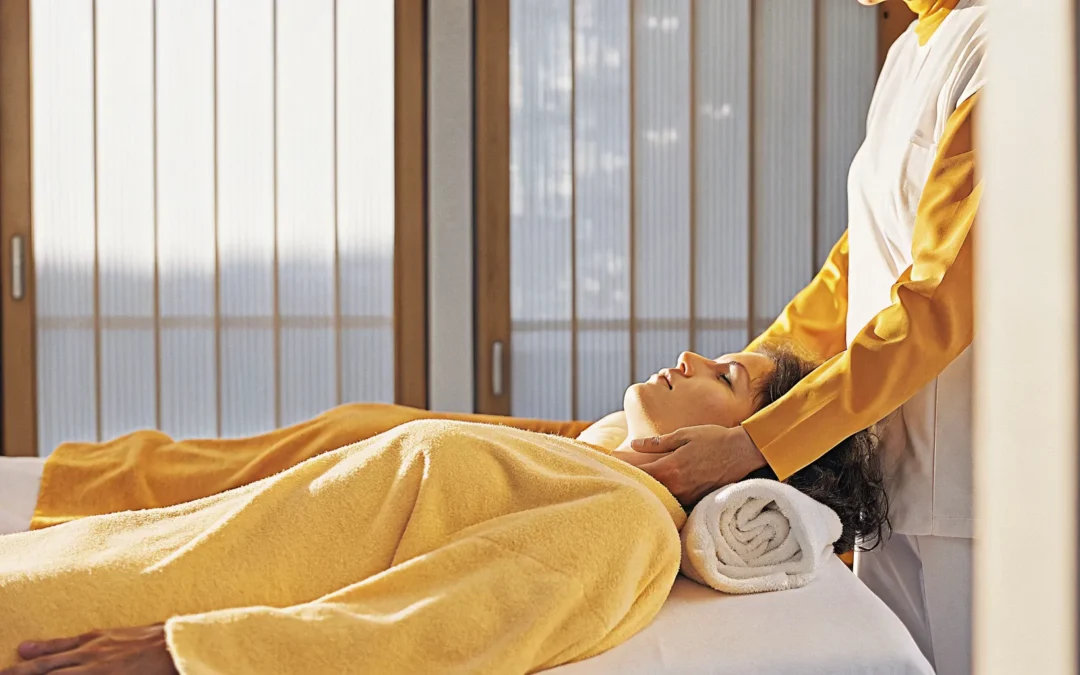
For individuals in early recovery, clinical environments can sometimes trigger defensive stress responses. CranioSacral Therapy offers a safe, comforting, and deeply relaxing alternative. During a typical session, the patient remains fully clothed and lies comfortably on a padded massage table. The practitioner uses soft, precise hand placements on key areas of the body, including the head, spine, sacrum, and feet. Because the patient is fully clothed, the therapy respects physical boundaries and minimizes feelings of vulnerability. This gentle environment promotes a profound, rapid shift from the sympathetic (stress-driven) nervous system to the parasympathetic (rest-and-recover) state, allowing patients to experience a deep sense of safety and quietude that they may not have felt in years.
Releasing Trauma and Restoring Health in Recovery
In the context of substance abuse and dual-diagnosis treatment, CST is more than just a relaxation technique. It serves as an essential bridge that helps release deeply held physical and emotional tensions, supports trauma resolution, and significantly improves sleep quality. At CenterPointe Counseling and Recovery in Sarasota, Florida, CST is positioned as an adjunctive therapy integrated into the broader evidence-based IOP program. It complements standard clinical modalities like cognitive-behavioral therapy by addressing the physiological imprint of trauma and addiction within the body’s tissues.
This innovative, body-centered program is led by Carrie Phelps, LMHC, LMT, CST-T, Clinical Director at CenterPointe. Leveraging over 30 years of holistic clinical experience, Carrie integrates her psychotherapy expertise with specialized craniosacral techniques to address the complex somatic needs of individuals in recovery. For those seeking to understand how this gentle modality fits into a comprehensive treatment plan, CenterPointe’s foundational craniosacral therapy overview provides a detailed look at how somatic work accelerates emotional and physiological healing.
The Mind-Body Healing Mechanism of CST in Recovery
Addiction is rarely just a psychological struggle; it is a deeply physiological one. For individuals navigating a dual diagnosis of substance use disorders and co-occurring trauma, traditional therapeutic modalities can sometimes feel incomplete or even overwhelming. While cognitive approaches target the conscious mind, trauma often remains locked within the somatic tissues and the nervous system. CranioSacral Therapy (CST) serves as a gentle, somatic bridge that addresses this deep-seated physical stress, offering a powerful pathway to healing without the risk of retraumatization.
In early recovery, the autonomic nervous system is frequently trapped in a chronic state of hyperarousal or “fight-or-flight.” This dysregulation manifests as acute anxiety, emotional volatility, and severe sleep disturbances. Because CST utilizes an incredibly light touch, equivalent to the weight of a nickel, to release restrictions in the craniosacral system, it acts directly on the central nervous system. By encouraging the body to shift from a sympathetic survival state into a parasympathetic restorative state, CST facilitates deep nervous system re-regulation, significant anxiety reduction, and improved sleep quality. This somatic release of physical and emotional tension supports the body’s natural healing mechanisms, which are crucial for maintaining long-term sobriety (F006).
This body-informed methodology serves as a vital complement to traditional talk therapies, such as cognitive-behavioral therapy (CBT) or psychodynamic counseling. Talk therapy requires patients to articulate their pain, analyze behavioral patterns, and actively process experiences. While essential, relying solely on cognitive processing can occasionally lead to intellectualizing feelings or, worse, triggering emotional overwhelm and retraumatization. Mind-body interventions, on the other hand, target multiple complementary recovery processes, helping to foster self-awareness, ease chronic physical discomfort, and reduce overall psychological distress (F004; F010). By addressing the physiological stress response through holistic, body-oriented care, patients can manage the complex somatic dysregulation associated with chronic substance use without needing to immediately find the words for their trauma (F012).
Ultimately, these two approaches are not mutually exclusive; they are profoundly synergistic. Talk therapy helps rewrite the cognitive narratives of recovery, while CranioSacral Therapy quietly settles the physiological alarm system. Together, they form a cohesive, whole-person framework that respects both the mind and the body, allowing patients to build a stable foundation for lasting health.
CranioSacral Therapy Within CenterPointe’s Holistic Treatment Model
At CenterPointe Counseling and Recovery, healing is approached through a “brain-based + heart-centered” philosophy. Rather than treating addiction solely as a cognitive or behavioral issue, CenterPointe understands that trauma, stress, and substance use disorders deeply impact the body’s nervous system. To address this physiological connection, CranioSacral Therapy (CST) is positioned as an adjunctive therapy integrated into the broader evidence-based intensive outpatient program (IOP) (F009). This integrated approach provides clients with a comprehensive, body-informed pathway to sustainable recovery.
CenterPointe’s structured holistic addiction treatment approach is delivered inside the state-of-the-art MindSpa facility, conveniently located at 5632 Bee Ridge Road in Sarasota, Florida. The program is specifically designed to accommodate working professionals, with Intensive Outpatient Program (IOP) sessions scheduled on Monday, Wednesday, and Friday evenings from 6:00 PM to 9:00 PM. This schedule ensures that clients can receive high-level clinical support without disrupting their daily career or family responsibilities.
Through CenterPointe’s unique partnership with MindSpa, clients gain access to a powerful suite of complementary, brain-based modalities that work in tandem with CST to restore nervous system balance (F011). These cutting-edge therapies include:
- Neurofeedback (with Dr. Rozelle): A non-invasive brain-training therapy that helps regulate brainwave patterns, mitigating symptoms of anxiety, depression, and cravings.
- Acupuncture (NADA Protocol): A clinically proven five-point ear acupuncture protocol specifically designed to reduce withdrawal symptoms, alleviate stress, and promote emotional stability.
- Sensory Floatation: Deep physical and mental decompression inside floatation tanks that minimizes sensory input, lowers cortisol levels, and accelerates physical healing.
To illustrate the difference in care quality, the table below highlights how CenterPointe’s integrated, body-informed approach contrasts with traditional, institutional addiction treatment models.
| Program Element | Traditional Treatment Models | CenterPointe’s Integrated Approach |
|---|---|---|
| Group Size & Attention | Large, institutional groups (often 15-20+ clients) with limited individual clinician focus. | Small-group settings strictly limited to 8–10 patients to guarantee highly personalized, compassionate care (F008). |
| Treatment Schedule | Rigid daytime scheduling that forces clients to pause their careers, education, or family lives. | Flexible evening schedule (Monday, Wednesday, Friday, 6:00 PM – 9:00 PM) designed for working professionals. |
| Clinical Accessibility | Communication restricted to scheduled sessions; messages routed through automated clinical switchboards. | Direct therapist cell phone access, fostering deep trust, safety, and rapid support when clients need it most. |
| Therapeutic Scope | Heavy reliance on traditional talk therapy, ignoring the physiological and somatic storage of trauma. | An integrated “brain-based + heart-centered” model combining CST, neurofeedback, acupuncture, and sensory floatation (F011). |
Who Can Benefit From CST in Outpatient Recovery?
Because addiction is both a physiological and psychological challenge, recovery requires tools that address the whole person. At CenterPointe Counseling and Recovery, CranioSacral Therapy (CST) serves as a vital resource for individuals navigating the complexities of outpatient rehabilitation. By gently addressing the physiological stress response through holistic, body-oriented interventions, CST helps regulate the complex nervous system dysregulation that is frequently associated with chronic substance use.
Ideal Candidates for CranioSacral Therapy
While CST is highly adaptable, certain individuals in outpatient recovery find it exceptionally beneficial:
- Individuals with Dual Diagnosis: Patients managing co-occurring mental health disorders, such as PTSD, depression, or severe anxiety alongside substance use, benefit from the profound calming effect CST has on the autonomic nervous system.
- Those Experiencing High Anxiety and Nervous System Dysregulation: Early recovery is often characterized by a hyper-aroused nervous system, leading to panic, restlessness, and sleep disturbances. CST helps release physical and emotional tension, supports somatic trauma release, and significantly improves sleep quality, which is crucial for early addiction recovery.
- Individuals in Early-Stage Recovery: When the body is clearing toxins and adjusting to sobriety, the physical cravings and stress can feel overwhelming. Gentle somatic therapy provides a safe space to process these intense bodily sensat
CranioSacral Therapy benefits individuals in early outpatient recovery who experience high anxiety, nervous system dysregulation, dual diagnosis conditions, or chronic pain. Because CST is non-invasive and conducted with the patient fully clothed, it provides a safe entry point to somatic healing.
ions.
- People with Chronic Pain Driving Self-Medication: Many individuals fall into substance abuse as a way to self-medicate untreated physical pain. By addressing restrictions in the craniosacral system, CST targets the physical roots of discomfort, offering a non-pharmacological path to pain management.
A Safe, Non-Invasive Approach
One of the greatest advantages of CranioSacral Therapy in an outpatient setting is its safety profile and non-invasive nature. Sessions are conducted with the patient fully clothed, lying comfortably on a massage table. The therapist applies an extremely gentle touch, equivalent to only about 5 grams of pressure, or the weight of a nickel, to detect and release restrictions around the brain and spinal cord. With minimal contraindications and zero invasive techniques, it is an accessible, low-pressure therapy for individuals who may feel guarded or highly sensitive to physical touch.
An Integrated, Adjunctive Modality
It is important to emphasize that CranioSacral Therapy is not a standalone cure or a replacement for traditional clinical care. Instead, CST is positioned as an adjunctive, supportive therapy integrated into the broader, evidence-based Intensive Outpatient Program (IOP) at CenterPointe. By combining heart-centered somatic healing with rigorous individual counseling, group therapy, and medical support, patients receive a comprehensive care plan that addresses the cognitive, emotional, and physiological dimensions of long-term healing.
Frequently Asked Questions About CranioSacral Therapy and Recovery
Who should not do CranioSacral Therapy during recovery?
While CranioSacral Therapy is extremely gentle and non-invasive, it is contraindicated for individuals with conditions where small changes in intracranial pressure are unsafe. This includes recent skull fractures, acute cerebral hemorrhages, active aneurysms, or severe bleeding disorders. Our clinical team always performs a thorough evaluation prior to starting any somatic therapy.
Why did I experience an emotional release or cry during CranioSacral Therapy?
Crying or feeling intense emotions during a session is a very common experience known as a somatoemotional release. The body holds onto physical memories of trauma and stress in its connective tissues. As the therapist gently releases these physical restrictions, the stored emotional energy is also freed, allowing for profound psychological relief and healing.
Is CranioSacral Therapy scientifically proven?
Yes, peer-reviewed clinical studies and systematic reviews show that CranioSacral Therapy is effective in stimulating the parasympathetic nervous system, lowering cortisol levels, and alleviating chronic pain and anxiety. This physiological stabilization provides a crucial foundation for neurobiological healing during addiction recovery.
Can I do CranioSacral Therapy as part of an outpatient program?
Absolutely. At CenterPointe Counseling and Recovery in Sarasota, CranioSacral Therapy is fully integrated as an adjunctive, supportive modality within our Intensive Outpatient Program (IOP). This allows you to experience deep somatic healing while maintaining your work, family, and daily commitments.
Take the First Step Toward Holistic, Mind-Body Recovery
True recovery is more than just stopping substance use; it is about restoring the delicate balance of your entire central nervous system and reclaiming harmony between your mind and body. At CenterPointe Counseling and Recovery, our heart-centered, brain-based Intensive Outpatient Program (IOP) is tailored to support every aspect of your healing journey.
If you or a loved one is ready to experience the benefits of an integrated, somatic-led approach to lasting sobriety in Sarasota, we invite you to connect with us today. Our private, non-institutional setting offers the clinical depth and compassionate support you deserve.