
Finding the right mental health support in Sarasota can feel difficult when you are already managing stress, anxiety, depression, trauma, or concerns related to substance use. A useful starting point is to compare the type of counseling offered, the provider’s credentials, the level of structure you need, and what your insurance plan requires.
When comparing mental health counseling sarasota options, ask whether care is individual, group, or family-based, confirm the provider’s license and approach, and verify benefits, deductibles, copays, coinsurance, and authorization directly with your plan. The right setting should fit your needs, schedule, and requested level of support.
Some people benefit from weekly individual counseling, while others may need coordinated outpatient support that includes more structure and shared connection. CenterPointe offers outpatient care for mental health and co-occurring substance use needs, and you can learn more about mental health outpatient treatment before deciding what questions to ask.
What Types of Mental Health Counseling Sarasota Residents Can Consider?
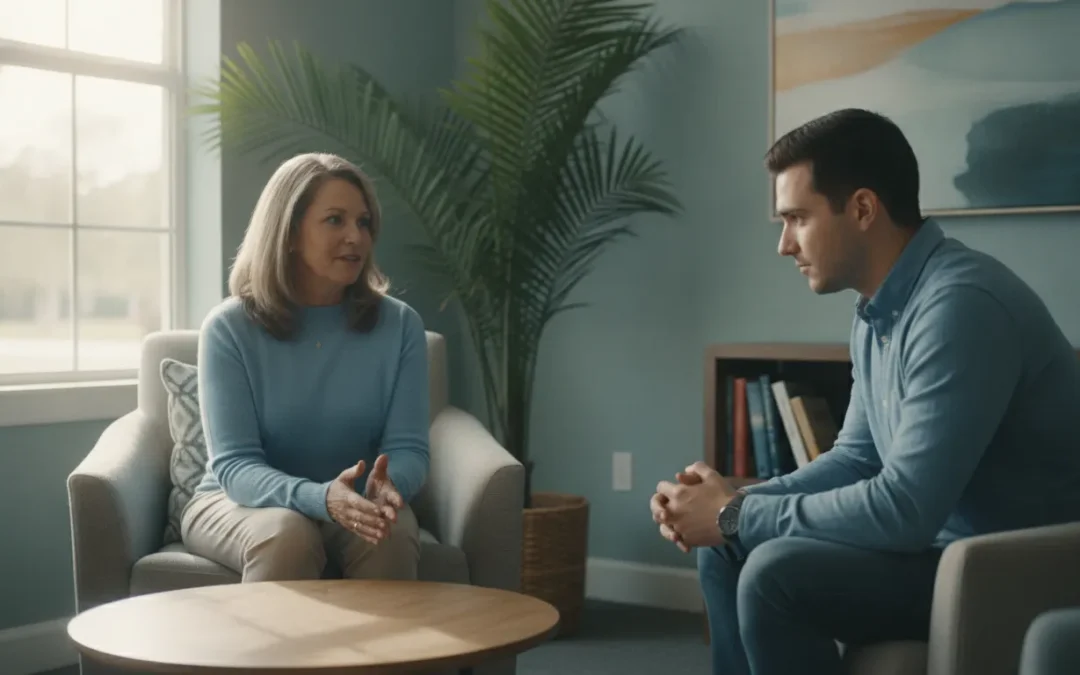
People seeking mental health counseling in Sarasota may encounter several formats, and the right fit depends on clinical needs, personal preferences, and the level of support recommended. Individual counseling offers private, one-on-one time to explore concerns and practice coping strategies. Family counseling includes relatives in conversations about communication, boundaries, or shared support. Group counseling brings people together with professional guidance around related challenges. Psychotherapy may be provided in individual, family, or group formats, depending on the person’s situation.
Some people benefit from regular outpatient visits, while others need a more coordinated and structured schedule. Intensive outpatient care can provide greater support than weekly counseling without being inpatient or residential treatment. A qualified professional can help determine which setting is appropriate rather than assuming that one format fits everyone.
When comparing Sarasota providers, look beyond the label used for a service. Ask how often sessions meet, whether the same clinician coordinates care, and what support is available between appointments. It is also useful to ask whether family participation is part of the plan and how the provider responds if symptoms or safety concerns change. These questions help separate a simple appointment schedule from a coordinated plan that may include several kinds of support.
Approaches used in counseling
Therapy approaches also vary. Cognitive behavioral therapy, or CBT, can help people recognize unhelpful beliefs and behaviors while building healthier coping skills. Dialectical behavior therapy, or DBT, teaches practical skills for managing emotions, handling stress, and improving relationships. Motivational Interviewing helps explore readiness for change, while 12-Step facilitation supports recovery-focused goals when appropriate.
CenterPointe documents these approaches within its Sarasota outpatient program, which serves people with substance use concerns and co-occurring mental health needs. Its program includes individual, group, and family therapy, but these components should not be understood as every counseling type being offered as a separate standalone service. CenterPointe’s Intensive Outpatient Program is more structured than weekly counseling and remains distinct from inpatient care. Learn more about outpatient substance abuse and mental health treatment in Sarasota.
How Do You Choose Between Individual and Group Counseling?
Individual and group counseling can serve different purposes, and neither format is automatically the best choice for every person. Individual sessions may offer more privacy for discussing personal history, symptoms, family concerns, or goals that feel difficult to raise in a group. Group counseling can provide structured practice, shared perspective, and the experience of working through challenges alongside other people. Family therapy may also be appropriate when relationships, communication, or support at home are part of the treatment plan.
| Individual counseling. | Group counseling. |
|---|---|
| One clinician and one client focus on personal concerns, goals, and circumstances. | A clinician guides several participants through shared discussion, skills, or recovery-focused work. |
| May provide space for topics that require greater privacy or individualized pacing. | May create opportunities to listen, practice communication, and learn from different perspectives. |
| Can be part of a broader plan rather than the only level of support considered. | Can add structure and connection when coordinated with individual or family services. |
| Frequency and goals should reflect the person’s assessment and clinical needs. | Group size, format, and participation expectations should be reviewed before starting. |
At CenterPointe, the Intensive Outpatient Program combines individual, group, and family therapy with recovery counseling and education when appropriate. Groups are limited to 8-10 patients, supporting a smaller setting while still allowing participants to learn with others. The program is outpatient care, not inpatient or residential treatment. You can learn what the Intensive Outpatient Program includes before deciding whether its structure fits your needs.
A qualified assessment should guide the decision. Professional placement guidance emphasizes matching clinical needs with an appropriate setting and intensity of services, rather than choosing based only on preference. If weekly counseling does not provide enough structure, or if a person may need a different level of care, discuss those concerns with a qualified provider. The goal is an informed plan that reflects current needs, safety, support, and practical circumstances.
What Should You Ask a Sarasota Counselor Before Starting?
Reaching out for support can feel vulnerable. A few focused questions can help you understand whether a provider’s training, services, and boundaries fit your needs before you schedule ongoing care.
- What are your credentials, experience, and scope of practice? Ask whether the counselor is licensed for the services you are seeking and what concerns they regularly treat. At CenterPointe, Carrie Phelps is listed as Clinical Director with LMHC, LMT, and CST-T credentials and more than 30 years of experience. You can learn more about this experienced Sarasota addiction counselor and review the clinical team and credentials. One clinician’s credentials should not be assumed to represent every provider.
- What approach do you use, and how will we evaluate fit? Ask how the counselor explains treatment goals, tracks progress, and adapts care when something is not helpful. CenterPointe documents approaches that include cognitive behavioral therapy, DBT skills training, Motivational Interviewing, and 12-Step facilitation. The right approach should be discussed in relation to your concerns, preferences, and goals.
- How do you protect privacy? Ask who can access your information, how communication is handled, and what limits apply to confidentiality. If substance use treatment is part of care, ask how applicable protections, including 42 CFR Part 2, are handled. No provider should promise absolute confidentiality, so request a clear explanation of policies and exceptions.
- What schedule and format are available? Clarify appointment times, attendance expectations, individual or group sessions, family involvement, and how cancellations work. Ask whether the service is weekly counseling or a more structured outpatient program. CenterPointe’s documented IOP includes individual, group, and family therapy, but services should be matched to your needs.
- How are co-occurring needs and higher levels of care handled? If mental health concerns occur alongside substance use, ask whether the provider assesses both. Also ask when they would recommend psychiatric, medical, crisis, detox, inpatient, or other specialized support, and how referrals are coordinated. A responsible counselor should explain what falls outside their scope rather than attempt to manage every situation alone.
Can Mental Health Counseling Include Co-Occurring Substance Use Support?
Yes. Mental health counseling can address emotional or behavioral concerns that occur alongside substance use, especially when the care team looks at the whole person rather than treating each concern in isolation. A coordinated plan may include therapy, recovery counseling, medication management when appropriate, and referrals to other professionals. The right combination depends on a person’s needs, history, safety, and response to care.
This support is often described within a continuum of care. In practical terms, a person may move to a more structured setting when weekly counseling is not enough, then step down as needs change. Outpatient counseling allows someone to live at home while attending scheduled services. Inpatient or residential care involves a substantially more intensive, around-the-clock setting. These levels are not interchangeable, and a qualified professional should help determine which setting is appropriate.
CenterPointe Counseling and Recovery provides outpatient care in Sarasota through an Intensive Outpatient Program (IOP) for substance use and co-occurring mental health needs. The program is designed for people who need more structure than weekly counseling but do not require inpatient care. It is not a detox, inpatient, or residential program. Services may include individual, group, and family therapy, along with recovery counseling, education, and medication management when appropriate.
People seeking local support can review the Sarasota location, at 5632 Bee Ridge Road, Unit 101, inside MindSpa. An initial conversation can help clarify whether standard counseling, coordinated outpatient support, or a referral to a higher level of care makes sense for the situation.
How Do You Verify Insurance for Counseling in Florida?
Insurance verification is a practical step before beginning counseling. A carrier name can be a useful starting point, but benefits, network status, authorization rules, and out-of-pocket responsibility are plan-dependent. Use this process to confirm details rather than relying on a general statement that a service is covered.
- Identify the exact plan. Gather the member ID, group number, plan name, subscriber information, and the customer-service phone number on the insurance card. If an employer offers more than one option, confirm which plan is active.
- Ask about behavioral-health benefits. Request an explanation of outpatient mental health counseling benefits, including whether individual, family, or group services are treated differently. Ask whether the plan uses a separate behavioral-health administrator. The Centers for Medicare & Medicaid Services explains that parity rules do not require every plan to cover mental health or substance use services. Review the specific policy and learn about mental-health parity requirements.
- Confirm member costs. Ask whether the deductible applies, then verify any copay, coinsurance, visit limits, or other patient responsibility. These amounts are plan-dependent and may vary by provider type or service setting. Request an estimate of benefits, not a guarantee of the final bill.
- Check authorization and network status. Ask whether prior authorization, a referral, or utilization review is required before counseling begins. Confirm that the specific provider and location are in network for the exact plan, because a carrier may list providers differently across products.
- Ask about exclusions and get confirmation. Clarify exclusions, covered diagnoses or services, telehealth rules, and what happens if benefits change. Record the representative’s name, call reference number, and date. Written confirmation can help resolve questions later, but it does not replace reviewing the plan documents.
CenterPointe lists Blue Cross Blue Shield, Aetna, VA Community Care, Tri-Care, United Healthcare, Cigna, Meritain Health, and Magellan Healthcare as starting points for insurance verification. Current benefits and authorization still require plan-specific review. For additional questions to ask, see this guide to verify mental health benefits and CenterPointe’s insurance verification information.
What Does Outpatient Mental Health Counseling at CenterPointe Look Like?
For adults who need more structure than a weekly counseling appointment but do not require inpatient care, CenterPointe provides outpatient support through an Intensive Outpatient Program (IOP). The schedule is designed for ongoing participation alongside work, family, or school responsibilities: sessions meet Monday, Wednesday, and Friday from 6:00 p.m. to 9:00 p.m., for nine hours each week. A typical program lasts 8 to 12 weeks, although the appropriate length can vary with clinical needs, progress, and personal circumstances.
Care is organized around the whole person rather than a single weekly conversation. Depending on the treatment plan, services may include individual therapy, group therapy, family involvement, recovery counseling, education, and medication management when appropriate. Groups are limited to 8 to 10 participants, creating space for guided learning and connection while preserving a more personal setting. CenterPointe’s documented approaches include cognitive behavioral therapy, DBT skills training, Motivational Interviewing, and 12-Step facilitation.

Recovery counseling is especially relevant when mental health concerns occur alongside substance use. The goal is not to place everyone in the same pathway, but to coordinate support at an appropriate outpatient level. Medication management may be included when clinically appropriate, with decisions based on the individual’s needs.
CenterPointe is located inside MindSpa at 5632 Bee Ridge Road, Unit 101, Sarasota, Florida. MindSpa services may offer complementary mind-body support during recovery, but they are not a cure, detoxification service, or substitute for counseling, medical care, or the IOP. Learn what the Intensive Outpatient Program includes, or review the Sarasota location before taking the next step.
Call CenterPointe at (941) 488-4811 before the FAQ to discuss your next step
Frequently Asked Questions
How do I choose between individual and group counseling?
Consider your goals, comfort with shared discussion, schedule, and the level of structure you need. A qualified clinician can review your history and needs to help determine whether individual sessions, group therapy, family involvement, or a combination is appropriate. Group therapy is led by professional psychotherapists and is different from a peer support group.
What should I ask a counselor about credentials?
Ask about the provider’s license, education, relevant training, counseling approach, privacy practices, scheduling, and experience with your concerns. A professional title alone does not establish a specific license or training. CenterPointe’s clinical team includes Carrie Phelps, LMHC, LMT, CST-T, Clinical Director, along with other master’s-level clinicians.
Can counseling address mental health and substance use together?
Yes, some outpatient programs are designed for co-occurring mental health and substance use needs. CenterPointe’s Intensive Outpatient Program includes individual, group, and family therapy plus recovery counseling. It is outpatient care, not inpatient or residential treatment, and is intended for people who need more structure than weekly counseling but do not require inpatient care.
How do I verify whether insurance will cover counseling?
Call your insurer to ask which local providers participate in your plan, then request benefits verification from the provider. Eligibility, deductibles, copays, coinsurance, prior authorization, and your final responsibility are plan-dependent. CenterPointe lists several in-network carriers, but recommends verifying current benefits and authorization for your specific plan before treatment begins.
What does CenterPointe’s outpatient IOP schedule look like?
CenterPointe’s documented IOP schedule is Monday, Wednesday, and Friday from 6:00 PM to 9:00 PM, or nine hours weekly. Services may include group, individual, and family therapy, recovery counseling, education, and medication management when appropriate. The typical duration is 8-12 weeks, but timing varies with individual needs and progress.
Ready to Take the Next Step?
Finding the right level of support can feel easier when you have a chance to discuss your questions with a knowledgeable team. CenterPointe can help you explore whether outpatient support may fit your needs and what to consider next.
Call CenterPointe at (941) 488-4811 to talk with the team.